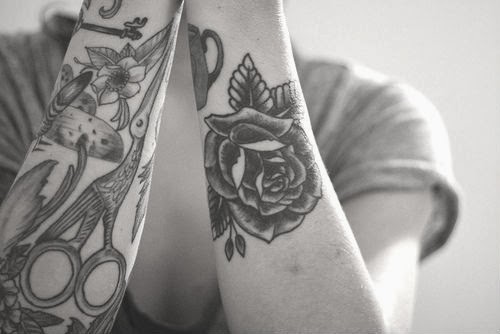
Tuesday, February 25, 2014

Blog post #6: Eyeball Tattoo

Tattoo can be done in any part of your body but there is one place in particular that is becoming a dangerous trend. Eyeball tattoo has been done by different people across the world, despite the fact that it is the riskiest place put an ink.

In relation to this topic, I found an article entitled "Corneal tattoing is eye beautification surgery" by Dr. Shalini Mohan from the site www.timesofindia.com.

Corneal tattooing is the practice of tattooing the cornea of the human eye. There are different reasons why people do this. Some go under this procedure to improve their cosmetic appearance. However, improvement of vision could not be achieved through this surgery.

Dr. Shalini Mohan states that there are various causes behind corneal tattooing. It varies from patient to patient, but most of them receive the treatment to alter the cosmetic appearance of their eyes due to any disease or accident.

"The corneal tattooing surgery is only a process of 10 to 15 minutes, The dye which is use for the tattoo lasts for 3 to 4 years. This varies from patient to patient," said Dr. Mohan.

As you can see, most of the people doing it is because of medical reasons and not just for fun. It's not a 100% sure procedure: therefore, I feel like there is still a lot of hesitance before going under.


In addition to this topic, I came across this article entitled "The Eyeball Tattoo FAQ" by Shannon Larratt from the site www.modblog.com.

Eyeball tattooing is the process of permanently altering the color of the eye. Generally this refers to the injection of ink under the surface of the white eye, rather than changing the color of the iris, although this is theoretically possible.

Most people do it for medical reasons like stated above, but there are others who get it because it makes them happy or feels right in some way. Some say because they like the way it looks or it suits them spiritually. There are even people who find it sexually appealing.

There are more cons than pros in doing such procedure. That is why doctors are generally not willing to tattoo healthy eyes due to the perceived risk. Worst case scenario, you lose your sense of sight.

"An experienced practitioner can reduce the chances of these risks but cannot eliminate them. Anyone considering an eyeball tattoo needs to seriously consider whether they would be willing to live a life where these risks come to fruition," says Shannon Larratt.


This trend is definitely one of the most controversial regarding tattoos, but I think people should be able to do what they want with their bodies. It's our lives and we should be able to decide what's best for us, even if it is against the opinion of many.


Tuesday, February 18, 2014

Blog post #5: Tattoos Can Give Cancer

As much as people like to be tattooed, do they really know the side effects and diseases that they might encounter? Usually, people get excited about tattoos and just want to show them off without even bothering to know the chemicals being used in to them.

In relation to the topic, I found an article entitled "Could your tattoo give you cancer? Scientists fear toxins from ink could enter blood and accumulate in your major organs" by the Daily Mail Reporter from the site www.dailymail.co.uk.

Scientists revealed that toxins from tattoo ink could be absorbed into the body and cause cancer. Experts believe that nanoparticles coming from the ink could enter the blood system, the spleen and the kidneys which can be can harmful because the body looses the ability to filter impurities. There where also studies that have found carcinogens in some ink and dyes in the UK and scientists want more regulation of the dyes used by the industry. In addition to that, Public Health England says that some inks contain substances such as cobalt and mercury.

Scientists want to do some regulations and control checks on tattoo dyes that have already been introduced on the smoking and sunbathing industries. Desmond Tobin, director of Bradford University's Centre for Skin Sciences, was shocked to discover there was no regulation on inks.

"Some inks are sold with little or no accompanying product data, and their composition may remain uncertain even at the point of use," said the Public Health England.

People should be more aware when they get their tattoos, make sure to ask the tattoo artist the ink that they use and if they have a license to make sure that they are really a tattoo artist and make sure to chose a clean tattoo studio, so that you may avoid having disease.

In addition to this topic, I came across this article entitled "To dye for? Jury still out on tattoo ink causing cancer" by Ian Oliver from the site www.theconversation.com

Last year, Jorgen Serup, Professor of Dermatology from Copenhagen University, reported that 13 of 21 tattoo inks commonly used in Europe contained cancer-causing chemicals. Even tattoo ink manufacturers admit that 5 percent of their products contain these types of chemicals.

But even if these inks do contain components that can potentially lead to cancer, we still don't know whether they will actually cause it to the people exposed to them. Maybe it is only risky to those who have large doses of ink used on their skin. Perhaps only small doses are required for it to happen.

Further evidence could easily be collected by observing if people with tattoos have more cancers than those without. The problem here is that the process of getting cancer often takes a long time, so there must be allowed a sufficient time between the tattoo and the recording of cancer.

"Unless the association between cancer and tattoos is very strong, it may be difficult to tease out the tattoo as the cause of the cancer," says Ian Oliver.

There are a lot of factors that can cause cancer. It's not just tattoo. But there should be more strict regulations for inks because, every year, more and more people are getting them. There should be more research done about this topic and they should announce it more to the people. For me, every action has its own risk. So you should just ask yourself if you are willing to take this risk for a piece of art in your body.


Blog post #4: Is It a Sin to Get a Tattoo?

I know that some people believe that it is bad having a tattoo because it means that you are committing a sin. One my sister's classmates really believes that getting inked is like disobeying God himself because you are modifying your body and changing the way He made you.

In relation to this topic, I found an article entitled "Tattoos and Christians - Should Christians Have Tattoos?" by Mary Fairchild from the site www.christianity.about.com.

The answer to whether it is a sin to get a tattoo is both yes and no. This is one of the questions many Christians struggle with. There is no definite answer if it is immoral or not because it is a disputable matter. However, Leviticus 19:28 says, "Do not cut your bodies for the dead, and do not mark your skin with tattoos, I am the Lord." Clearly, the Bible says no.

However, it is important to look at the verse in context. This passage in Leviticus is specifically dealing with the pagan religious rituals of the people living around the Israelites. God's desire is to set his people apart from other cultures. The main objective here is to prohibit witchcraft and other unworldly worships.

"Since tattooing is such a controversial issue today, I think it's important to examine your heart and your motives before you make the decision," says Mary Fairchild.

For me, it is not a sin because the situation today is way more different than it was back then. It is more important to ask yourself if this is really something you need and if you are sure that you are doing it with a clear conscience.


In addition to this topic, I came across this article entitled "Is It a Sin to Get a Tattoo?" by Jay Haizlip from www.huffingtonpost.com.

It really depends on who you ask if getting inked is against God's command. They mostly refer to Leviticus 19:28 and this verse is absolutely relevent for us today. Anyone getting a tattoo really needs to ask themselves, why I am getting this and what is the meaning of this tattoo? Is the tattoo an expression of sorcery, idolatry or pagan symbolism? If you believe it is, then don't do it because you'll only have regrets. If you think that it is not forbidding all expressions of tattoos, then get one. Culturally speaking, over the last 20 years, tattoos have become more socially acceptable. A recent study by Pew Research, claims roughly 40 percent of Millennials have tattoos. It's no longer just the outcasts of society; doctors, attorneys, suburban moms, celebrities, even pastors can be found with tattoos.

"Ultimately, the decision is between you and God," says Jay Hazlip.

There are a lot of opinions and debates over this, but if you really consider yourself as a true Christian, then I think you should never do so because some may misinterpret it as being "ungodly". Still, each Christian is free to choose what he or she should do in this matter. We just have to respect the decision of each one of us.


Blog post #3: Impact of Tattoos on your Job Search

Having or getting a tattoo is awesome. More and more people get ink nowadays, but tattoos are still considered a taboo by the majority. The real questions are about the consequences that may acquire if you get visible tattoos and how it may affect you future when you are looking for a job.


As I researched about it, I was able to find an article entitled "Will having a tattoo cost you a job? Maybe, researcher says" by Victoria Taylor from the site www.nydailynews.com

New research out of the University of St. Andrews in Scotland suggests that having a tattoo may reduce your chances of getting a job, but it also depends on the design of the tattoo and where it is located, and what kind of job are you wanting to get.

Dr. Andrew Timming interviewed 15 managers involved in the hiring process at different organizations, including a bank, hotel, prison, university and bookstore. Most managers agreed that there are problems attached on having a visible tattoos, and one of the managers says that it makes a person look dirty. But the main and  most important thing is how customers might view employees with visible body art, because we all judge people by first impressions.

But in some industries having visible ink works to the applicants advantage. For example, a HR manager at a prison. Other organizations have said that having a tattoo is fine as long as it's hidden under clothes, while others said only certain kinds of tats would negatively affect the applicant.

"Tattooed applicants can take comfort in the fact that the stigma associated with body art appears to be on the wane and that, as a corollary, there will likely be an increase in the number of potentially sympathetic tattooed hiring managers," said  Victoria Taylor.

So if you want a tattoo, maybe you should get it in a place where it can't be seen. Also, just remember that it still depends on the job that you are applying for. But at the end of the day, it's still your personal choice because you are the one that should be making decisions for yourself.

In addition to this topic, I found another article entitled "Tattoos and Piercings in the Workplace" by Erika Icon from the site www.workingworld.com.

Tattoos and piercings are becoming more accepted as a form of art and expression. At this point in time, they have occupied a big part of the cultural landscape in big cities like Los Angeles. While most of society is becoming more and more liberated and expressive, and piercings and tattoos are considered part of the mainstream culture, some employers are still hesitant and having a hard time to accept people with body art in the workplace.

If a company tells you that you are prohibited to show off your tattoos or piercings at work, they are not doing anything illegal. There is no legal system that protects workers who have body art. The law surrounding discrimination is only in regards to race, color, religion, age, nationality, origin and gender. There are some exceptions like if you have body art because your religion requires you to.

Of course there are limits. Companies cannot fire you just because they discovered you have tattoos or piercings. On the other hand, they can use it as an excuse not to hire you. That is another reason why you should just cover around the workplace.

"Many companies have policies that prohibit tats and piercings that are generally outlined in their handboook and/or employee manual," says Erika Icon.

I understand why employers still have hesitance in hiring people with tattoos and piercings. These people are not the most professional looking. So just try to hide them as much as possible because, if it affects your job search, you can't really do anything about it since there are no laws or regulations regarding this issue.


Monday, February 17, 2014

Blog post #2: Tattoo Addiction

I like tattoos. I still remember the first time I ever saw one, and I was just amazed because it was a piece of art in a person's body. After that, I just wanted to get a tattoo so badly. I was younger back then, so it was like impossible for me to get one done since I looked very young. But as the years pass by, my desire to get a tattoo grew even more. I think that if I will get a tattoo it will never be just one, and I also think that I may get addicted to it. But the real question is, can people get addicted to tattoos?

In a relation to the topic, I found an article entitled "Can I Really Get Addicted to Tattoos?" by Mary McMahon from the site www.wisegeek.org. 

People who get their first tattoos gets teased by their friends saying that they are gonna be addicted  because it's hard to stop with just one. However, addiction is extremely complicated, and while people may receive tattoos compulsively, it rarely crosses the line into truly addictive behavior.                                                                                                                                                                  Addiction is hard to define, and the language used to describe addiction has shifted in response to more information about the way the brain works. As a rule on addiction, it is something that a person relies on, physically or psychologically and some
times both.

When someone becomes addicted, his or her behavior becomes harmful in pursuit of the experience or chemical required to satisfy physical or emotional needs.


The process of tattooing is intense, emotionally and physically. It causes the body to release high levels of endorphin to deal with the pain. The same endorphins are released during forceful physical exercise and other periods of physical stress. In fact, many people feel good when running thanks to the  endorphin release.

Someone is considered addicted to tattoos if he or she becomes physically or emotionally dependent on the process. Some people may become attached to the rush of endorphin during the inking process. Also, if someone chooses to get a new one rather than coping with a situation, or pays for a tattoo before securing the rent, he or she may be addicted.

"Becoming truly addicted to tattoos is, in all probability, extremely rare. People with multiple tattoos can cite a variety of reasons for wanting several pieces of artwork on their body," says Mary McMahon.

The only thing that I want to say is that we shouldn't judge a book by it's cover. 

In addition to the topic, I came across this article entitled "Addiction to Tattoos and the Pain" by Tara Toxicity from the site www.taratoxicty.hubpages.com.

Tattoos are obviously painful. To have them means piercing your skin thousands of times per minute with a needle. When asked 10 people if they found tattoos hurtful, all of them said yes. When asked again if they would get another one, 8 answered yes. Meaning, 8 of 10 are willing to go through that pain over and over again.


There are different reasons why people go back to tattoo shops and get inked. It could be a cross between adrenaline rush from getting it done and the beauty of the finished product that is making you want more. It is also said that the pain experienced during the inking process send the brain signals of pleasure that makes you want to go back once more.


Most of the times, during the inking process, the pain increases more and more. There are burning and tickling sensations that some people like, while others try to endure. After the tattoo is done, you'll be planning on the next one to get. It's something difficult to explain. Tattoos just have meanings to people and each one has a long story behind them. If tattoos weren't so expensive, a lot more people would be addicted to it.


"There is no right or wrong answer for why tattoos are so addicting. No real scientific proof or meaning. And they are not addicting for all people, Some regret their tattoos, some don't want to go through the pain again, and then there are the rest of us, who can not wait to go through the pain again.", says Tara Toxicity.


Being a tattoo addict is not that big of a deal compared to other bad addictions. I see it as a way of expressing who you truly are. It is a permanent art in your body that has a story to tell, so I don't think getting lots of them is bad at all.


Blog post #1: Why Tattoos are Permanent

Being inked is maybe one way to have a permanent peace of art in your body. Some people get inked because the tattoo that they want has a sentimental value, while others just do it because they think that it's cool to have a tattoo or they just want  some art on their body. In fact, if you ask me if tattoos are cool, I would have to say yes. But the real question is: why are tattoos permanent? Also, what are the risks that you may have by getting one?


In relation to the topic, I found an article entitled "FYI: What Makes Tattoos Permanent?" by Carley Lintz from the site www.popsci.com. 

To apply a tattoo they use a mechanized needle to puncture the skin and inject ink in to the second layer of the skin also known as the dermis. Having a tattoo means damaging your skin. Basically, the body responds with white blood cells which attempt to absorb the foreign particles and dispose of them in the blood stream.

In 2010, tattoos have become increasingly popular according to Pew Research Report. About 40 percent of Americans between the age of 18 and 29 have at least one tattoo. Age is probably one of the problems that you may encounter on having a tattoo because a tattoo becomes blurred after years on having one, and also fading and distortion may happen due to changes in body shape. That is one of the reason why tattoo shops only accept people above 18 years old of age because that's basically the age when your body is fully developed.

If you don't like your tattoo no more whether it's faded or causing a bad case of buyer's regret, the most effective method is the laser treatment. To remove a tattoo using laser, the light beam zeroes in on a single color (in most cases black) and breaks up the pigments particles until they are small enough to be carried away by white blood cells. Usually this process requires many sessions depending on the size of the tattoo and the color and also removing a tattoo may cause scarring.

The problem with tattoos is exactly what makes them so appealing--their permanency.

"If you have the name of your boyfriend on there and then you marry somebody else, that's a problem," Laumann says.

So if you want to get a tattoo, think about it. If it's gonna be worth it and are you still gonna like it even after a couple of years. Also, never ever have a tattoo of your boyfriend/girlfriend's name, because you never know what's gonna happen to your relationship.

In connection to this topic, I came across an article untitled "How do tattoos last for so long?" by Neil Walker from the site www.thenakedscientists.com.

The definition of tattoo is marks produced on skin by the injection of the material by a puncturing. As a dermatologist, Neil Walker sees a variety of tattoos, not any of those which have been applied by a so-called tattoo artist. Occasionally he sees a lot of people with a black kind of tattoo, where a dye called PPD is used and it can cause nasty skin reactions.

A henna tattoo is not a tattoo at all, but it's a drying process using the paste to produce a design in the dead outer layers of the skin. The design fades as the skin regenerates and that's the reason why tattoos that are applied by puncturing are permanent. The skin regenerates over a period of six to eight weeks.

Pigments that are applied under the growing layers are in the dermis or supporting layer of the skin and are turnover. Pigment granules are recognized by the body as a foreign material and there are cells which function is to remove such material by engulfing them and transporting it to the lymph glands. These cells are unable to engulf pigment granules every certain size and, therefore, the body seem to surround them at their microscopic level by a thin layer of fibrous or scar tissue.  And they become permanently trapped in the dermis.

The removal process takes time and can fade over time with different colors fading at different rates depending on the particle size of the pigment.

"In short tattoos are permanent because pigment particles are injected under the growing layer of the skin and the body’s mechanisms for dealing with foreign materials can't remove the particles over a certain size," Neil Walker says.

Tattoos are definitely something to think about before getting  because they are permanent. In other words, they will not vanish with soap and water. It is probaly better to get a henna first just to see if tattoos look good on you. The best part of it is that it only lasts for maybe a week and, if you get one from a good henna artist, it will look like a real tattoo because usually most people that do henna are also tattoo artist.


Tuesday, February 11, 2014

Blog Post #8: Italian Beer

I don't drink beer and Italians are better known for wines. However, there is an increasing love for Italian beer as well. Not a lot people are aware of it, but they are slowly growing worldwide.

This article entitled " Italian Beer " featured in the Rome File website lists down the most famous types of beer in Italy.

Italian beer is becoming more and more famous in the market, especially artisanal beers. Usually, Italians buy them from the supermarket and it is most likely that they'll buy Peroni, Nastro Azzurro and variations on the Moretti brand. Peroni is the best known among the three. Nastro Azzurro is its premium version. While Moretti is owned by Heineken which is not Italian. However, it maintains its Italian taste. Moretti makes half a dozen different types of beers which have a very strong taste. Most recently, they are known for their alcohol-free beer called Moretti Zero. Artisanal beers are also rapidly growing in the industry. The most famous makers are 32 Via dei Birrai, Almond '22 and Baladin. These beers are stronger than the ones offered in supermarkets and they tend to come in larger bottles.

I remember that my stepdad's beer is Moretti. It's been in the market for a very long time. Longer than Moretti and Peroni. For him, it is a perfect combination with pizza.

" Although wine is still the staple of the Italian liquid diet, beer is becoming more popular. ", said in the Rome File website.


Another interesting article on beer entitled " Top 10 Italian craft beers " by Hugo Mc Cafferty describes the characteristic of the emerging beers produces in Italy today.

Beer is booming in Italy. From artisan micro breweries to homemade ones, every Italian is now finding beer a drink to enjoy just like wine. Modern craft beer in Italy is inspired by the classic styles of the countries nearby like Germany which is the beer capital of the world. The first real Italian-made style were the chestnut beers. Their method of making included boiling, drying, roasting and smoking. Then, there is the "zero centimetre" which includes grains, vegetables, fruits and legumes. There are so beers produced with different types of fruits like Vopedo peach and Martin Sec pear. Basically, Italy produces most of it beers just like the way they make wine. This is the emerging trend there. 

I do not much about beer making but it looks like the Italian beers is just starting to grow. Many beers experts and simple observers like my stepdad saw this boom and feel like sooner or later it will match the importance of wine in Italy.

Italy used to be though of a wine-only country, but not any more. In the last 10 years beer brewing has exploded in Italy. ", said Hugo Mc Cafferty.


In conclusion, wine still remains the number one drink in Italy. Up to now, nothing can match the quality of the red and white Italian wines. However, the beer in Italy is starting to catch up. It growing more and more each day and it is becoming another source of pride for Italians.